

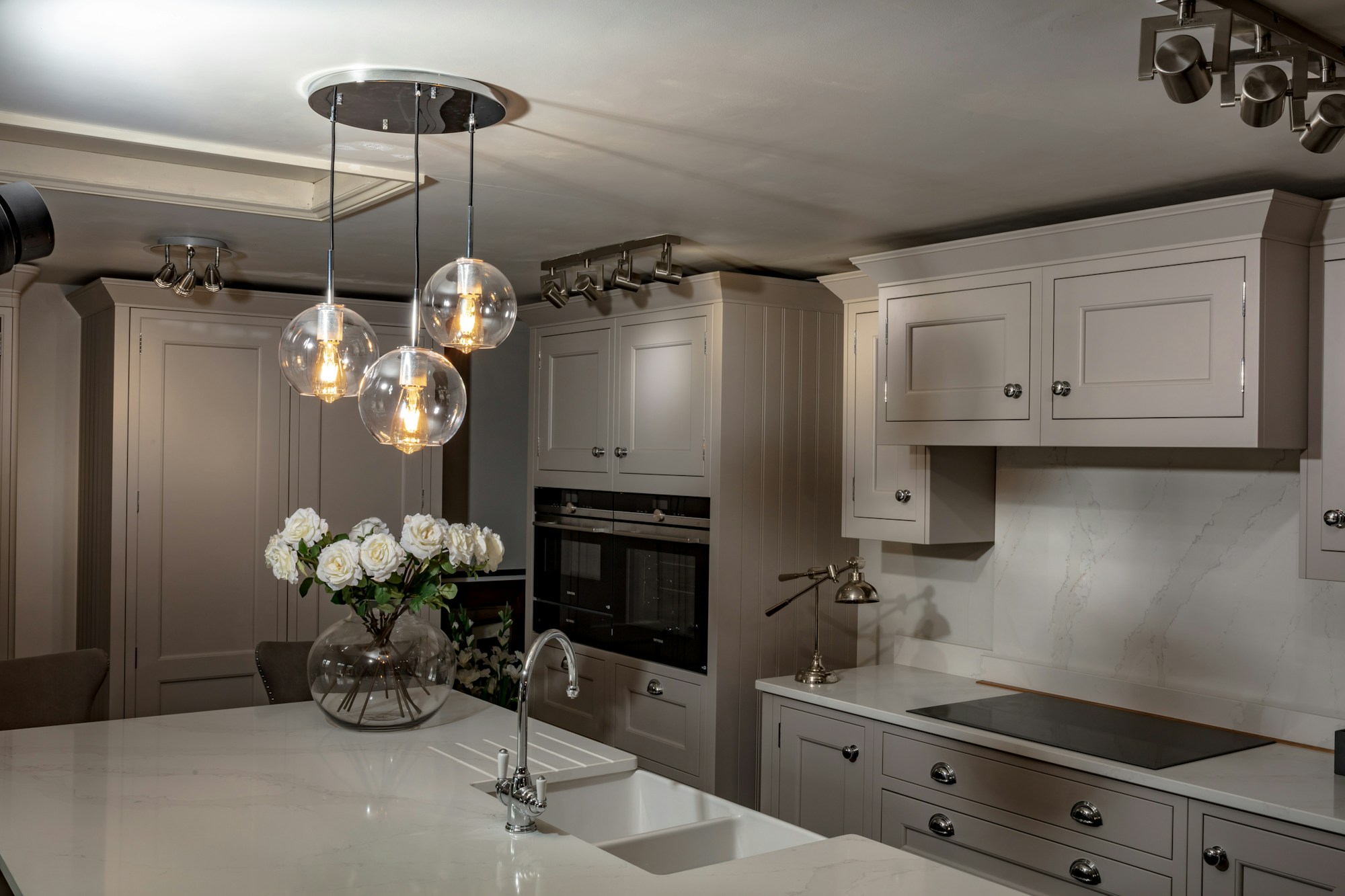
The kitchen island pendant is one of the most visible lighting decisions you will make in your home. Get it right and the whole kitchen pulls together. Get it wrong and no amount of nice cabinetry or stone countertop will save it. The good news is that once you understand a few basic rules, choosing the right pendant becomes a lot less stressful.
I want to walk you through exactly what to think about — size, height, spacing, finish, and bulb — so you can make a decision you will actually be happy with five years from now.

Start With the Size of Your Island
The biggest mistake people make is choosing pendants that are too small. A delicate little pendant over a large island looks lost and almost sad. As a starting point, think about the width of your island and leave roughly 12 inches of clearance on each end. So if your island is 6 feet wide, you have about 4.5 feet of workable space for your pendants.
For a single pendant centered over a smaller island — say 4 feet or under — aim for a shade that is 12 to 16 inches in diameter. For larger islands where you are hanging two or three pendants in a row, smaller shades in the 8 to 12 inch range tend to work better so they do not crowd each other.
How High Should Pendant Lights Hang?
The standard rule is 30 to 36 inches between the bottom of the pendant and the surface of your island. This keeps the light at a useful working height without being in anyone's face when they are sitting at the island. If you have very tall ceilings — 10 feet or higher — you can go a little higher, but be careful. Too high and the pendant starts to look like it is floating disconnected from the island below it.
If your pendants have adjustable cords, set them at 30 inches first and live with them for a day before committing. Lighting height is one of those things that looks different in real life than it does in your head.
Spacing Between Multiple Pendants
When hanging two or three pendants in a row, spacing matters just as much as height. A good rule of thumb is to leave at least 24 to 30 inches between the centers of each pendant. This gives each fixture room to breathe visually without leaving awkward gaps.
For a row of three over a long island, I usually recommend centering them as a group rather than spacing them perfectly to the edges — it tends to look more intentional and considered.
Matching the Finish to Your Kitchen
The finish on your pendant should relate to at least one other metal in the kitchen. If you have brushed nickel faucets and stainless appliances, a matte black or brushed nickel pendant will feel cohesive. If you have brass or gold hardware on your cabinets, a warm brass pendant ties the whole room together immediately.
You do not have to match perfectly — mixing metals is actually a great look when done intentionally — but there should be a reason for your choice. Pick the pendant finish before you pick anything else and let it guide the rest of your decisions.
Pick the pendant finish before you pick anything else and let it guide the rest of your kitchen decisions.
Choosing the Right Bulb
This is where a lot of people get tripped up after doing everything else right. The fixture looks beautiful but the light it casts is cold and harsh and the whole kitchen feels clinical instead of warm. For kitchen islands, I always recommend LED bulbs in the 2700K to 3000K color temperature range. This produces a warm, slightly golden light that makes food look appetizing and people look good — which is exactly what you want in a kitchen.
Avoid anything above 3500K for pendant lights over an island. That range gets into cool white territory that works great in offices and bathrooms but feels wrong in a kitchen.
One Last Thing Before You Buy
Think about what you are doing at that island most of the time. If it is a prep surface where you are chopping and cooking, you want meaningful light output — not just decorative ambiance. If your island is more of a breakfast bar or gathering spot, you can afford to go more decorative and rely on under-cabinet lighting or recessed lights for the actual task lighting.
A pendant that looks stunning but only puts out 200 lumens is going to frustrate you the moment you try to dice an onion in its shadow. Always check the recommended lumen output in the product specs before you commit.
Ready to find the right pendant for your island? Browse our pendant light collection — every piece is hand-selected for real American homes, with full specifications so you know exactly what you are getting before you buy.